DARE
Distributed Aquatic Response Experiments
🌍A Global Call for Participation
Aquatic ecosystems span strong environmental gradients—from marine to brackish to freshwater systems—and host an extraordinary diversity of life. Yet much of experimental ecology still relies on simplified designs, single stressors, and a limited set of model organisms. As a result, we often lack a general, mechanistic understanding of how organisms respond to environmental change across ecosystems, taxa, and levels of biological organisation.
DARE (Distributed Aquatic Response Experiments) is a global, community‑driven experimental initiative inspired our perspective Sasaki, Isanta‑Navarro & Govaert (2025). DARE directly responds to our call for experimental ecology that balances realism and feasibility by scaling up collaboration rather than complexity within single labs.
Our overarching goal is to identify general patterns in organismal performance across environmental gradients, and to link these patterns to broad ecological concepts—such as body‑size rules, life‑history strategies, and performance trade‑offs—across the full aquatic continuum.
🧬The Idea 🔬
The Big Picture and Scientific Motivation
- Embrace ecological diversity rather than standardizing it away
- Work across freshwater, brackish, and marine systems
- Integrate results across taxa, life histories, and levels of organization
- Maintain experimental feasibility while increasing realism at the network scale
What Is the Experiment About?
- Temperature
- Salinity
Response variables
- Growth rates
- Body size or size distributions
- Development time
- Reproductive output or fecundity proxies
- Other organism‑specific performance measures
A Distributed, Multi‑Taxon Approach
- Marine, brackish, and freshwater ecosystems
- Microbes, primary producers, invertebrates, and vertebrates
- Model and non‑model organisms
- When do different organisms show similar or contrasting performance responses?
- How do environmental effects scale across body sizes, life histories, and ecosystems?
- Can coordinated experiments help explain classic ecological patterns across realms?
Do you DARE? 📣
Minimum expectation to participate
- You work with at least one aquatic organism you know well
- You can manipulate one environmental gradient relevant to your system
- You can measure a performance‑related response
- You are willing to contribute relative responses or effect sizes
Commitment to inclusivity
- Supporting distributed, low‑cost experimental designs
- Exploring small funding opportunities to support smaller labs
- Explicitly encouraging participation from the Global South
- Valuing existing data, partial designs, and diverse methodological approaches
Timeline
- 2026: Network building, conceptual alignment, and method discussions
- 2027: Distributed experimental phase across systems and regions
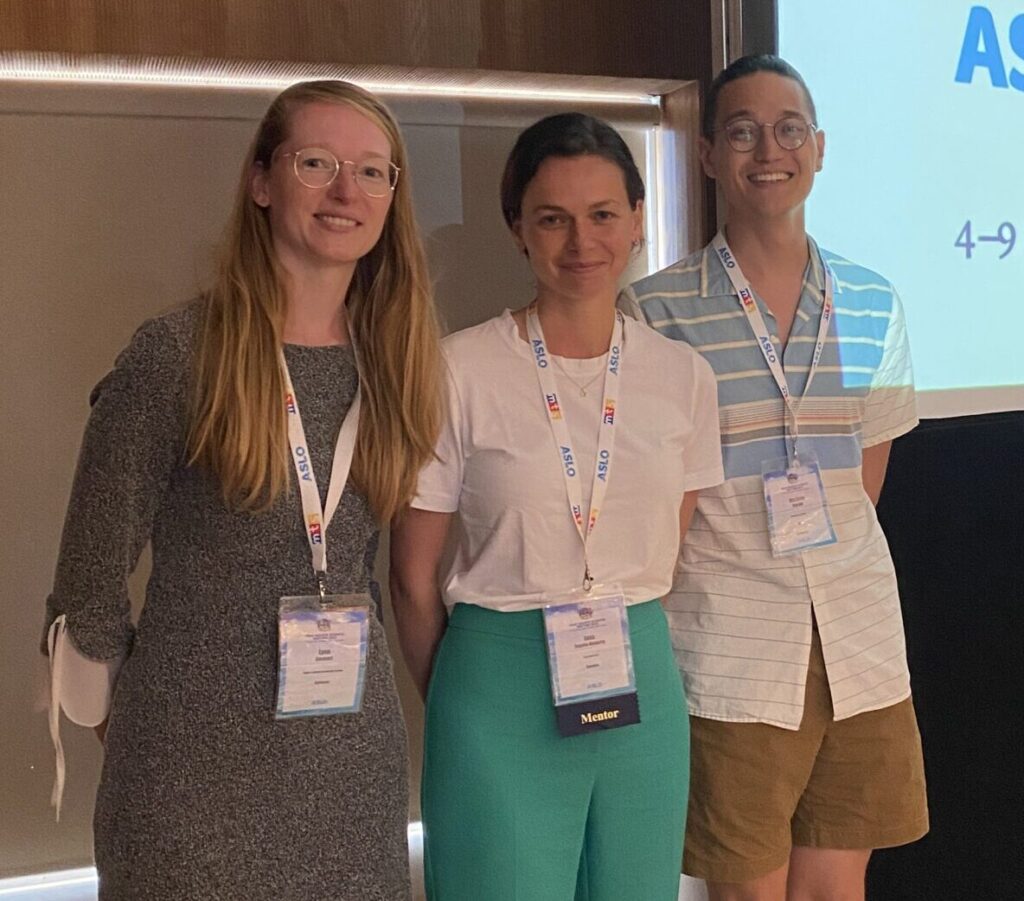
Join the DARE Team!
If you work with aquatic organisms and are interested in how environmental gradients shape organismal performance—across ecosystems, taxa, and scales—DARE is for you.
Lynn Govaert, Jana Isanta-Navarro and Matthew Sasaki